Precision motion and pressure regulation play a vital role in modern automation, aerospace engineering, heavy equipment, and advanced manufacturing operations. Many of these high-performance systems rely on the hydraulic servo valve, a precision control component designed to convert electronic input signals into highly accurate hydraulic movement. Its fast response and fine control capabilities make it essential for applications requiring consistent positioning and smooth operation.
From industrial robotics and CNC machining centers to aircraft control systems, servo hydraulic valves deliver exceptional responsiveness, stability, and repeatability. By ensuring precise control of fluid flow and pressure, these valves help improve system efficiency, operational safety, and overall performance in demanding precision-control environments.
What is Hydraulic Servo Valve?
A hydraulic servo valve is a precision control valve that regulates hydraulic fluid flow and pressure in response to an electrical input signal. Unlike conventional Hydraulic Valves, which operate primarily through mechanical actuation, servo systems combine electronics, hydraulics and feedback control to achieve extremely accurate positioning and pressure regulation.
In a typical servo valve in hydraulic system, the valve receives a command signal from a controller. The internal mechanism adjusts spool position proportionally, controlling the direction, flow rate and pressure of hydraulic fluid supplied to actuators. This capability allows high-precision machines to perform delicate, high-speed operations with minimal error.
Common industries using servo hydraulic valves include:
- Aerospace flight control systems
- Industrial robotics and automation
- Injection molding and press machines
- CNC machining equipment
- Material testing systems
How Does a Hydraulic Servo Valve Work?
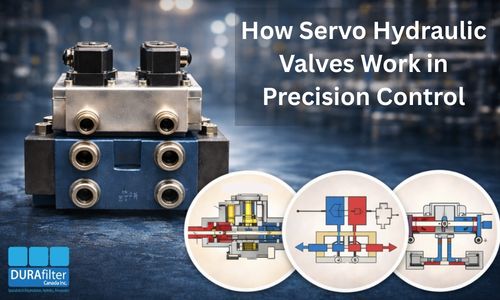
Understanding the hydraulic servo valve working principle helps clarify why these components are critical in precision control systems. An electro hydraulic servo valve operates by converting a small electrical signal into a proportional hydraulic output capable of moving heavy loads with high accuracy.
Step-by-Step Working Process
- Electrical Signal Input
A controller sends a low-power electrical signal to the torque motor inside the electro hydraulic servo valve.
- Torque Motor Movement
The torque motor converts the electrical signal into mechanical movement, typically shifting a flapper or pilot stage mechanism.
- Hydraulic Amplification
The pilot stage creates pressure differences that move the main spool inside the servo valve hydraulic assembly.
- Fluid Flow Regulation
Spool movement precisely regulates hydraulic fluid flow and pressure to the actuator, producing controlled motion.
Because the valve continuously adjusts according to feedback signals, servo hydraulic valves can maintain extremely accurate positioning even under varying loads and operating conditions.
Key benefits of electro servo operation include:
- Ultra-fast response time
- High repeatability
- Precise position and speed control
- Smooth pressure modulation
These capabilities make the hydraulic servo valve an essential component in modern Industrial Hydraulic Valves systems requiring closed-loop control.
Types of Servo Hydraulic Valves
Different applications require different control capabilities, which is why multiple servo hydraulic valves designs are available. The most common categories include electro hydraulic servo valve, pressure control servo valve and multi-stage precision valves.
| Valve Type | Primary Function | Typical Applications |
| Electro Hydraulic Servo Valve | Controls position, speed and flow using electrical signals | Robotics, aerospace systems |
| Pressure Control Servo Valve | Maintains highly precise pressure regulation | Test rigs, hydraulic presses |
| Multi-Stage Servo Valve | Provides high flow capacity and amplification | Heavy industrial machinery |
| Industrial Precision Servo Valves | Designed for continuous high-accuracy operations | CNC machines, automation lines |
A pressure control servo valve is particularly useful where stable force or load regulation is required, such as testing machines or high-precision forming processes. Meanwhile, industrial hydraulic servo valves often feature multi-stage amplification to manage high-flow systems without sacrificing accuracy.
Selecting the correct servo valve hydraulic configuration depends on response speed, load capacity and required control precision.
Key Components of Industrial Hydraulic Servo Valves
To understand how industrial hydraulic servo valves achieve high accuracy, it is important to examine their internal components. Each element plays a critical role in maintaining stable and responsive performance.
Major components include:
- Torque motor
- Flapper-nozzle or jet pipe assembly
- Main control spool
- Feedback spring or sensor
- Hydraulic ports and housing
The torque motor initiates motion based on electrical input, while the pilot stage amplifies the signal hydraulically. The spool then regulates fluid flow within the servo valve in hydraulic system, ensuring the commanded output matches the control signal.
Important performance factors:
- Clean hydraulic fluid for contamination-free operation
- Proper calibration for stable control
- Feedback mechanism accuracy
- Compatibility with system pressure ratings
Because of their precision nature, servo hydraulic valves typically operate alongside safety devices such as Hydraulic Safety Valves and Hydraulic Relief Valve Blocks, protecting the system from excessive pressure conditions.
Applications of Servo Hydraulic Valves in Precision Control Systems
The ability of the hydraulic servo valve to control position, speed and force simultaneously makes it indispensable across many advanced industries. Modern automation depends heavily on servo hydraulic valves for maintaining consistent production quality and operational efficiency.
Key Industrial Applications
- Aerospace flight surface actuation
- CNC machine tool positioning
- Plastic injection molding systems
- Steel and metal forming presses
- Robotics motion control
- Structural testing equipment
In aerospace applications, an electro hydraulic servo valve enables extremely precise control of aircraft control surfaces, ensuring stability and responsiveness. In manufacturing environments, servo valve hydraulic technology allows automated machinery to maintain micron-level positioning accuracy during repetitive operations.
These advantages significantly improve production quality, reduce material waste and enhance energy efficiency compared with conventional Industrial Hydraulic Valves.
Common Problems and Selection Tips for Servo Valve Hydraulic Systems
Although servo hydraulic valves provide exceptional performance, improper maintenance or incorrect selection can reduce system efficiency. Engineers must carefully consider operating conditions, filtration requirements and performance specifications when selecting a pressure control servo valve or electro hydraulic servo valve.
Common Operational Challenges
- Fluid contamination causing spool sticking
- Slow response due to incorrect valve sizing
- Calibration drift affecting positioning accuracy
- Pressure instability in high-load applications
Selection Guidelines
- Determine required flow rate and pressure range.
- Choose the correct pressure control servo valve or motion-control valve type.
- Ensure compatibility with controller electronics.
- Verify system filtration meets manufacturer requirements.
Proper installation and maintenance greatly extend the life of the hydraulic servo valve and ensure consistent system performance.
Looking for high-performance hydraulic filtration and precision valve solutions? Contact Durafilter today to get expert guidance and reliable products designed to enhance the performance and life of your servo hydraulic systems.
Why Servo Hydraulic Valves Are Critical in Modern Automation
As industries continue to demand higher accuracy and automation speeds, the importance of servo hydraulic valves continues to grow. Their ability to combine electronic intelligence with hydraulic power enables precise motion control even in high-load applications where electric actuators alone cannot deliver sufficient force.
Compared with traditional Hydraulic Valves, a servo valve hydraulic system provides:
- Superior positioning accuracy
- Faster response times
- Smooth motion control
- Enhanced productivity in automated systems
In complex systems, servo valves often work together with protective components such as Hydraulic Relief Valve units and Hydraulic Safety Valves, ensuring both precision and safety.
Conclusion
The hydraulic servo valve remains one of the most critical components in precision hydraulic control systems. By converting electrical signals into highly controlled hydraulic outputs, servo hydraulic valves enable advanced automation across aerospace, manufacturing, robotics and heavy industry. Understanding the hydraulic servo valve working principle, valve types and proper selection criteria helps engineers design efficient and reliable servo valve in hydraulic system applications.
Whether implementing an electro hydraulic servo valve for motion control or a pressure control servo valve for load regulation, selecting the right industrial hydraulic servo valves ensures long-term performance, system accuracy and operational safety in modern industrial environments.
FAQs:
1.What does a servo valve do?
A servo valve precisely controls the direction, pressure, and flow rate of hydraulic fluid in response to an electrical command signal. This allows accurate control of position, speed, and force in high-precision systems such as robotics, aerospace controls, and CNC machinery.
2.Can hydraulic servo valves be repaired?
Yes, many hydraulic servo valves can be repaired through cleaning, recalibration, seal replacement, or component refurbishment. However, repairs should be performed by certified technicians using proper testing equipment to restore original precision and performance.
3.What is the working principle of a hydraulic servo valve?
A hydraulic servo valve works by converting an electrical input signal into precise hydraulic fluid control. The signal moves a torque motor and pilot stage, which shifts the main spool to regulate fluid flow, pressure, and direction accurately for controlled actuator motion.
4.Where are electro-hydraulic servo valves commonly used?
They are widely used in aerospace flight control systems, CNC machines, robotics, injection molding equipment and material testing machines where precise positioning and pressure regulation are essential.