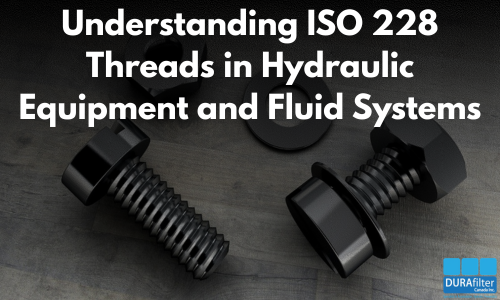
 The ISO 228 standard defines specifications for parallel pipe threads, commonly known as BSP (British Standard Pipe) parallel threads, used in hydraulic systems. Unlike tapered threads, these cylindrical threads maintain a constant diameter throughout their length. In technical documentation, parallel threads are marked with a “G,” while tapered threads use an “R” designation. For engineers, maintenance professionals, and procurement specialists working with hydraulic systems, understanding ISO 228 threads is essential. Correct selection ensures component compatibility, prevents costly system failures, and maintains efficient operations. This article explores the technical aspects of ISO 228 threads, their applications in hydraulic systems, and why they matter for industrial operations.
Why ISO 228 Threads Are Important in Hydraulic Systems
ISO 228 threads are widely used in hydraulic applications globally due to several technical advantages:
- Dimensional Consistency and Interchangeability: ISO 228 threads provide excellent standardization across manufacturers worldwide. When components from multiple suppliers must work together in a hydraulic system, the standardized dimensions ensure proper fit and seal compatibility.
- Versatile Sealing Compatibility: Parallel threads conforming to the ISO 228 standard work exceptionally well with various sealing methods, particularly bonded seals and O-rings. This versatility allows engineers to select the most appropriate sealing solution for specific pressure ranges, fluid types, and environmental conditions
- Global Procurement Advantages: The widespread adoption of BSP ISO 228 threading facilitates international procurement and equipment integration. For North American operations importing hydraulic equipment from European or Asian manufacturers, ISO 228 compatibility ensures that replacement parts and system expansions can proceed without thread conversion challenges.
Sealing Mechanisms Used with ISO 228 Threads
Unlike tapered threads that create a seal through thread interference, parallel ISO 228 threads require additional sealing mechanisms to prevent fluid leakage. Understanding these sealing methods is essential for proper component selection and installation:
- Bonded Seals (Dowty Seals): The most common sealing approach for BSP ISO 228 connections involves bonded seals. These metal-encapsulated elastomeric seals sit in a specially designed seat between the threaded connection and the mating surface. When the fitting is tightened to the specified torque, the bonded seal compresses to create a reliable, leak-free connection that withstands high pressures and vibration.
- O-Ring Face Seals: This is another widely used sealing method with the ISO 228 threads. In this configuration, an O-ring sits in a groove on the face of the male fitting. When the connection is assembled, the O-ring compresses against a flat sealing surface on the female port, creating an effective barrier against fluid leakage.
- PTFE Tape and Liquid Sealants: Some specialized applications utilize PTFE tape or liquid sealants with ISO 228 threads. However, these methods are generally considered less reliable for high-pressure hydraulic systems compared to bonded seals or O-rings. These sealing approaches are more common in low-pressure applications or pneumatic systems.
Reliability of Parallel Threads in Industrial Applications
The parallel thread design inherent to the ISO 228 standard offers distinct advantages in industrial hydraulic applications:
- Superior Vibration Resistance: Unlike tapered threads that can loosen under vibration, parallel ISO 228 threads provide consistent clamping force without the risk of thread wedging. In high-vibration environments such as mobile hydraulic equipment, construction machinery, and manufacturing automation systems, BSP ISO 228 connections demonstrate superior resistance to loosening. The parallel thread geometry, combined with proper torque specifications and appropriate sealing elements, maintains seal integrity even under continuous mechanical stress.
- Thermal Stability: Temperature cycling, a common challenge in hydraulic systems, is well-managed by BSP ISO 228 threads. The parallel thread design accommodates thermal expansion and contraction without compromising seal effectiveness, provided that the sealing element is selected for the operating temperature range. This contributes to extended service life and reduced maintenance interventions, particularly in systems experiencing wide temperature variations during operation.
- Reduced Port Damage Risk: Parallel threads eliminate the risk of port cracking from over-tightening, a common problem with tapered thread designs. The constant diameter of ISO 228 threads prevents wedging actions that can split thin-walled ports or damage component housings.
Common Hydraulic Components That Use ISO 228 Threads
The widespread adoption of the ISO 228 standard across hydraulic component manufacturing reflects its practical advantages and proven reliability. Numerous critical system elements utilize these parallel threads for fluid connections:
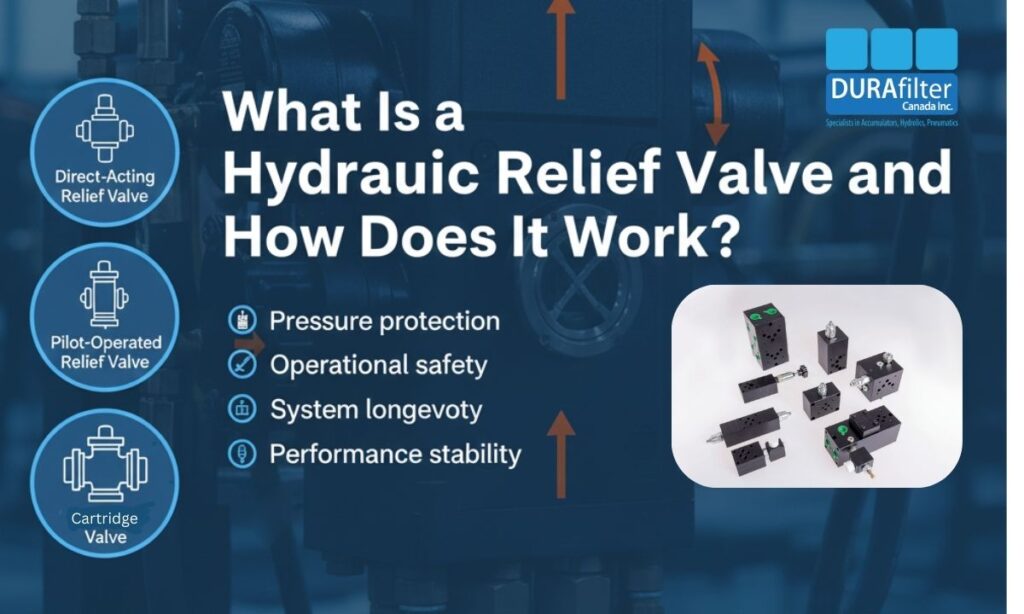
- Hydraulic Valves: Directional control valves, pressure relief valves, flow control valves, and check valves frequently incorporate ISO 228 threads for fluid inlet, outlet, and auxiliary connections. The parallel thread design allows for compact valve body construction while maintaining high pressure ratings.
- Hydraulic Filters and Filtration Systems: Filtration equipment represents one of the most common applications for BSP ISO 228 threads. Filter housings, spin-on filter assemblies, return line filters, and pressure filters utilize these parallel threads for both inlet and outlet connections.
- Hydraulic Pumps and Fluid Control Components: Hydraulic pumps, including gear pumps, vane pumps, and piston pumps, frequently employ ISO 228 threads for suction ports, pressure ports, and auxiliary connections such as case drain lines. The standard’s ability to accommodate various sealing methods makes it adaptable to different pump designs and performance requirements.
ISO 228 vs Other Thread Standards in Hydraulics
Understanding how the ISO 228 standard compares to alternative thread specifications helps engineers make informed component selection decisions. Several thread standards coexist in the hydraulic industry, each with specific characteristics and regional preferences. The following table highlights the key differences:
| Thread Standard |
Thread Type |
Sealing Method |
Key Advantages |
| ISO 228 (BSP Parallel) |
Parallel/Straight |
Bonded seals, O-rings, or gaskets |
Reusable connections, precise torque control, excellent vibration resistance, and no port damage risk |
| NPT (National Pipe Thread) |
Tapered (60°) |
Thread interference |
Self-sealing, no additional seal needed |
| BSPT (BSP Tapered) |
Tapered (55°) |
Thread interference |
Self-sealing capability, compatible with some BSP systems |
| ISO 6149 (Metric) |
Straight with O-ring |
O-ring in port |
Compact design, high-pressure ratings, leak-free performance |
How to Choose the Right ISO 228 Threaded Components
Selecting appropriate ISO 228 threaded components requires careful consideration of several technical factors to ensure system compatibility, performance, and longevity:
- Pressure Rating Verification: Verify that all ISO 228 components and sealing elements are rated for maximum system pressure, including pressure spikes. The sealing method significantly influences pressure capability, with bonded seals generally supporting higher pressures than O-ring face seals.
- Thread Size Selection: Thread size must align with flow requirements and available port configurations. Undersized connections create excessive pressure drops and flow restrictions that reduce system efficiency, while oversized connections waste valuable space and increase component costs. Consult flow capacity charts and pressure drop calculations when determining optimal thread sizes.
- Material Compatibility Assessment: Material compatibility affects both thread durability and seal longevity. Ensure that component materials resist corrosion from hydraulic fluids, environmental exposure, and galvanic reactions between dissimilar metals.
- Thread Tolerance Verification: Verify that ISO 228 thread tolerances match application requirements. Class A threads offer tighter tolerances for precision applications requiring exact fits, while Class B provides an adequate fit for general hydraulic use.
For businesses and professionals seeking trusted hydraulic solutions, DURAfilter offers over 30 years of expertise in supplying, repairing, and customizing hydraulic components and systems across North America. Whether you need filters, pumps, accumulators, or other ISO 228-compatible hydraulic components, DURAfilter combines technical knowledge, global brand partnerships, and rapid support to keep your systems operating at peak performance.
FAQs
Can I mix ISO 228 and NPT fittings?
No. These thread types are not compatible due to their different geometries. Attempting to mate them may result in leaks or connection failure. If you need to connect these different standards, use purpose-designed adapters.
Which seal type works best with ISO 228?
The choice depends on your application. Bonded seals (Dowty seals) often perform well in high-pressure and high-vibration environments. O-ring face seals can be better for applications requiring frequent disassembly. Consider your system’s pressure, temperature, and maintenance needs when selecting.
How do I identify ISO 228 threads?
Look for “G” markings followed by a size (like G1/2). You can verify by checking that threads are parallel (not tapered). Thread gauges provide the most accurate identification when markings are unclear.
Can ISO 228 threads be reused?
Generally, parallel thread design allows for multiple assembly cycles without thread degradation. However, sealing elements (bonded seals or O-rings) should typically be replaced each time to maintain reliable sealing performance.